Marine Conservation and Sustainable Fisheries
SHARE


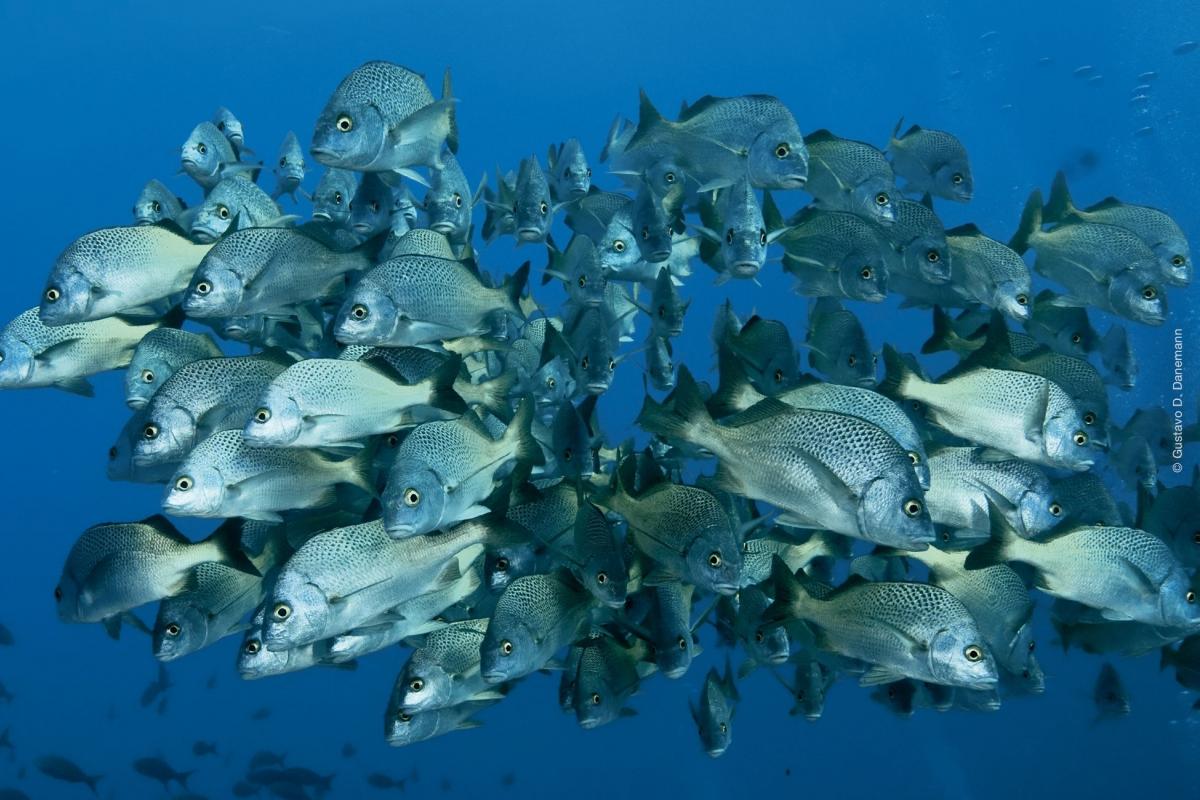
Even when the economy of coastal communities in this region depends largely on local fishing resources and landscape, the lack of effective governance, open access, and public policies divorced from sustainability have caused the progressive loss of previously abundant and rich natural capital. This has caused most fishing communities to operate in extremely short term, creating a vicious spiral of predation, loss of biodiversity, and increased economic stress.
Strategic focuses
-
Strengthening of governance in marine protected areasand protection of priority sites.
-
Fisheries improvement, to drive them towards sustainability.
- Surveillance and enforcement in marine protected areas and fishing grounds.
Marine Protected Governance
MPAs in northwestern Mexico cover some of the most ecologically important and productive fishing grounds and provide a legal and administrative framework for the governance of the protected marine territory. Governance is exercised through structures, rules and regulations that dictates how resources can and cannot be used. While some of those elements are exclusive for MPAs, other can be applied on unprotected fishing grounds.
In 2015 we began evaluating the management effectiveness of MPAs, to identify needs and opportunities to improve their governance. Systematic evaluations allowed us to design Governance Improvement Projects (GIP), in which we join efforts with authorities and other stakeholders to: facilitate and improve participation and decision-making, adjust management instruments, create technical capacity, and provide long-term funding for its operation, with the overall purpose of increasing the capacity of MPA to conserve the protected marine ecosystem.
Sustainable fisheries
Supporting and coordinating the design and implementation of a Fisheries Improvement Projects (FIP), as defined by the Marine Stewardship Council (MSC), we collaborate with fisheries stakeholders (particularly fishers and distributors) and partner NGOs to voluntarily modify strategic aspects of the management and operation of key small-scale fisheries, in order to upgrade their performance as measured by clearly defined indicators. Implemented actions are evaluated by external reviewers, which grade each fishery according to their level of improvement, until they become certifiable as "sustainable". With these, our goal is to establish key small-scale fisheries as sustainability models capable of driving change at a larger scale.
Regulatory compliance: surveillance and enforcement
Improve regulatory compliance has proven to be one of the most effective approaches to marine conservation. To do so, effective surveillance and enforcement requires institutional coordination, technical capacity and human and financial resources. Based on a conceptual model which identifies the different roles NGOs could play to collaborate with authorities and other stakeholders to increase the capacity and efficiency of surveillance and enforcement operations, since 2010 we have assessed the needs and opportunities to strengthen surveillance and enforcement in almost all MPA in NW Mexico, promoted and facilitated interinstitutional coordination and planning, hired and trained personnel, developed innovative funding mechanisms to ensure long-term operations, invested in technology such as radio communications, long-range cameras and radars, and recently installed at the Cabo Pulmo National Park the first Marine Monitor system in Mexico.
We have also developed an innovative mobile-based logbook app, designed to integrate spatial and temporal information from the field to systematically report field surveillance operations. With these we expect to effectively achieve high levels of compliance in MPAs and fishing grounds.
Launched in Bahía de los Ángeles (eastern Baja California) in 1998, PNO´s Marine Conservation and Sustainable Fishing Program combines regional and priority-site conservation projects through the coordinated operation of technical staff located in our Ensenada, Bahia de los Angeles, La Paz, Puerto Vallarta, Tepic and Culiacan offices.
La ubicación de los sitios conservación y los proyectos regionales están marcados en azul y las AMP existentes en verde. Las oficinas del Programa, indicadas con el logotipo Pronatura, se ubican en Ensenada (B. C., sede), Bahía de los Ángeles (B. C.), La Paz (B. C. S.), Tepic (Nay.), Culiacán (Sin.) y Puerto Vallarta (Jal.).
Work progress
- We collaborated with the staff and Advisory Boards of six Natural Protected Areas to strengthen the governance mechanisms necessary for the effective protection of the marine ecosystem.
- We coordinated the implementation fishery improvement projects of relevant small-scale fisheries to Northwest Mexico to promote sustainability and generate models that can be replicable in other areas.
- We facilitated inter-institutional coordination, provided training for park rangers, developed mechanisms of private financing, and acquired and installed equipment to strengthen surveillance activities and compliance with legal provisions in Marine Protected Areas and fisheries in the region.
Latest news
You can find here the latest news of Pronatura Noroeste.
View more

Programs
These are the topics on which our programs are organized.